
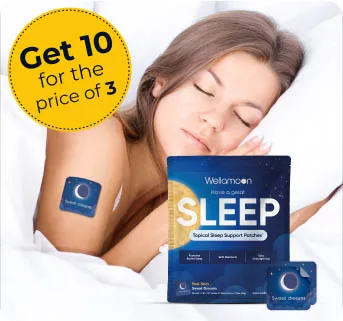
Wellamoon Sleep Patches Reviews: Do They Actually Work?
A thorough look at the ingredients, transdermal sleep science, real customer experiences, and whether these sleep patches are worth adding to your nightly routine in 2026.
Wellamoon Sleep Patches — Quick Overview
Sleep deprivation has a way of becoming the background noise of modern life — so constant and familiar that many people stop recognizing it as a problem and simply accept exhaustion as their default state. The afternoon energy crash. The difficulty concentrating by mid-morning. The evenings spent lying awake while your mind refuses to quiet down, despite genuine tiredness. For millions of Americans, this is not an occasional bad night — it is every night.
Wellamoon Sleep Patches have been attracting attention as a different kind of sleep support — a transdermal patch that delivers sleep-promoting ingredients gradually through the skin while you sleep, rather than as a single oral dose that peaks and fades within hours. This review takes a detailed, honest look at whether the product lives up to that premise.
Bottom line up front: Wellamoon Sleep Patches use transdermal delivery to release melatonin and natural relaxation compounds gradually through the night — addressing both sleep onset and the nighttime waking that single-dose oral supplements handle poorly. The ingredients are well-researched, the delivery advantage is real, and customer feedback is consistently positive. Not a solution for clinical sleep disorders, but a genuinely useful tool for most people with common sleep difficulties.
Ready to Finally Sleep Through the Night?
Wellamoon Sleep Patches are available through the official website. Check current pricing and active bundle offers.
Check Official Website & PriceAffiliate link — we may earn a commission at no extra cost to you.
What Are Wellamoon Sleep Patches?
Wellamoon Sleep Patches are transdermal adhesive patches designed to support restful sleep by delivering melatonin and complementary natural relaxation ingredients through the skin over the course of the night. Applied to clean, dry skin — typically the inner wrist, upper arm, or shoulder — before bedtime, the patch slowly releases its active compounds through the dermal layers and into the bloodstream via the capillary network beneath.
The transdermal format distinguishes Wellamoon from the far more common oral melatonin tablet, gummy, or capsule. Where oral supplements deliver their payload in a single bolus that peaks quickly and drops off within a few hours, a well-formulated transdermal patch provides sustained, gradual release throughout the sleep period — a profile that more closely mirrors the body’s own nocturnal melatonin secretion pattern.
The product is designed for people who experience:
- Difficulty falling asleep, particularly due to a racing or overactive mind at bedtime
- Waking frequently during the night and struggling to fall back asleep
- Light, unrefreshing sleep that leaves them tired despite adequate hours in bed
- Sleep disruption from stress, shift work, travel, or irregular schedules
- Disappointment with standard oral melatonin supplements that work initially but lose effectiveness
- A preference for non-sedating, non-pharmaceutical sleep support
How Does Transdermal Sleep Delivery Work?
To understand why the patch format matters, it helps to understand both how melatonin works in the body and why oral delivery has meaningful limitations.
The Melatonin Problem With Oral Supplements
Melatonin is the body’s primary sleep-onset hormone. It is produced by the pineal gland beginning in early evening and rises gradually through the night, signaling every cell in the body to prepare for and sustain sleep. The natural nocturnal melatonin curve is gradual — a slow rise, a sustained plateau, and a gradual decline toward morning.
Oral melatonin supplements behave completely differently. When you swallow a melatonin tablet, it passes through the digestive system and is absorbed rapidly into the bloodstream, producing a sharp concentration spike that typically peaks within 60 to 90 minutes and then drops off steeply. This spike is often far higher than natural nocturnal levels — which is why some people experience grogginess the morning after taking melatonin supplements. More importantly, by 3 or 4 a.m., the melatonin from an oral supplement is largely cleared from the system — which is precisely why many people who fall asleep easily with oral melatonin still wake up at this time and cannot return to sleep.
How the Wellamoon Patch Addresses This
Transdermal delivery bypasses the digestive system entirely. Ingredients absorbed through the skin enter the bloodstream via dermal capillaries at a controlled rate determined by the patch’s formulation — producing a slower, more sustained absorption profile. For melatonin specifically, research published in the Journal of Pineal Research has demonstrated that transdermal melatonin delivery produces blood concentrations that remain elevated for significantly longer periods than oral delivery — better matching the body’s natural nocturnal pattern and more effectively supporting the second half of the sleep cycle when waking is most common.
Wellamoon Sleep Patches: Ingredients Analysis
A sleep patch is only as good as what is in it. Here is an honest breakdown of the key ingredients and what the research supports:
| Ingredient | Role | Primary Benefit | Evidence Base |
|---|---|---|---|
| Melatonin | Sleep hormone regulator | Faster sleep onset, circadian rhythm support | Very strong — extensively studied |
| L-Theanine | Amino acid relaxant | Calms mental hyperactivity, reduces pre-sleep anxiety | Strong — well-documented for relaxation |
| Valerian Root Extract | GABAergic herb | Reduces sleep latency, improves sleep quality | Moderate to strong — multiple clinical trials |
| Lavender Extract | Calming aromatherapeutic herb | Reduces anxiety, promotes relaxation and sleep readiness | Moderate — clinical evidence for sleep improvement |
| Magnesium | Nervous system regulator | Reduces nervous system excitability, supports deeper sleep | Strong — well-established in sleep research |
Melatonin
The NIH recognizes melatonin supplementation as effective for reducing sleep onset time and supporting circadian rhythm regulation, particularly for jet lag and shift work sleep disruption. At appropriate doses, it is also one of the safest sleep aids available — non-addictive, non-sedating, and without the cognitive impairment associated with pharmaceutical sleep medications. The key advantage in the Wellamoon patch is not the melatonin itself but its delivery: sustained transdermal release maintains effective blood levels through the night rather than spiking and fading like oral supplements.
L-Theanine
L-Theanine is a naturally occurring amino acid in green tea that produces a state of calm alertness — it increases alpha brain wave activity without causing sedation. For sleep purposes, its value lies in quieting the mental hyperactivity that prevents sleep onset for many people: the intrusive thoughts, the mental rehearsal of tomorrow’s concerns, the restlessness that keeps the brain engaged when the body is ready to sleep. Research published through PubMed has demonstrated L-Theanine’s ability to improve sleep quality — particularly the depth and quality of sleep, not just its onset. Combined with melatonin in the patch, it addresses both the timing and quality dimensions of sleep simultaneously.
Valerian Root Extract
Valerian root is one of the most clinically studied herbal sleep aids. Its primary mechanism involves increasing GABA availability in the brain — the same inhibitory neurotransmitter targeted by prescription benzodiazepine sleep medications, but through a gentler, indirect pathway that does not carry the dependency or cognitive risks of pharmaceutical GABA agonists. Multiple randomized controlled trials have found valerian supplementation reduces time to sleep onset and improves subjective sleep quality, with particular benefit for people whose sleep difficulties have an anxiety component.
Lavender Extract
Lavender’s calming properties are not merely anecdotal — clinical research has documented measurable effects on the nervous system. A study published in Phytomedicine found that lavender extract supplementation significantly improved sleep quality and duration in patients with mixed anxiety and insomnia. The active compounds in lavender — primarily linalool and linalyl acetate — interact with GABA receptors in a manner similar to valerian, and also appear to modulate serotonergic pathways involved in mood and relaxation. Its inclusion in the Wellamoon formula alongside valerian provides complementary mechanisms targeting the anxiety-sleep connection.
Magnesium
Magnesium is involved in over 300 biochemical reactions in the body, including several that directly regulate sleep. It activates the parasympathetic nervous system, regulates the production and release of melatonin from the pineal gland, and binds to GABA receptors to reduce neural excitability. Harvard Health notes that many Americans are magnesium-deficient — and this deficiency is consistently associated with poorer sleep quality. Research published in the Journal of Research in Medical Sciences demonstrated that magnesium supplementation significantly improved sleep efficiency, sleep time, and early morning awakening in adults with insomnia.
Five Proven Sleep Ingredients, One Nightly Patch
Wellamoon combines melatonin, L-Theanine, valerian, lavender, and magnesium in a sustained-release transdermal format. Check current pricing on the official website.
View Current Pricing on Official SiteAffiliate link — we may earn a commission at no extra cost to you.
Wellamoon Sleep Patches: Pros and Cons
Pros
- Sustained-release format — works through the whole night
- Five well-researched sleep-support ingredients
- No morning grogginess reported by most users
- Non-habit-forming natural formula
- No pills, no timing around meals
- Addresses both sleep onset and nighttime waking
- Travel-friendly — easy to pack
- Satisfaction guarantee available
Cons
- Premium price vs. basic oral melatonin
- Mild skin irritation at application site in some users
- Results build over several nights — not instant
- Less effective for clinical sleep disorders
- Only available online — not in stores
What Does the Science Say About Wellamoon Sleep Patches?
The scientific case for Wellamoon rests on two foundations: the evidence for its individual ingredients, and the evidence for transdermal delivery as a meaningful improvement over oral supplementation for sleep support.
Ingredient Synergy
One of the most scientifically interesting aspects of the Wellamoon formula is how its ingredients work together. Melatonin handles circadian signaling. Magnesium supports melatonin production and reduces neural excitability. L-Theanine quiets the mental activity that prevents sleep onset. Valerian and lavender both target GABA pathways to reduce the anxiety-related arousal that disrupts sleep. This multi-mechanism approach addresses sleep from five complementary angles — which is why it is likely to be more effective than any single ingredient would be alone, and why it works for people with different underlying causes of poor sleep.
Transdermal Melatonin: The Research
Research on transdermal melatonin delivery specifically is meaningful. A study published in the Journal of Pineal Research found that transdermal melatonin produced more physiologically appropriate blood concentration profiles than oral supplementation — avoiding the supraphysiological spikes associated with oral doses while maintaining effective concentrations for longer. This is precisely the profile needed to support sleep throughout the night rather than just at its onset.
What Wellamoon Cannot Do
No transdermal sleep patch — however well-formulated — is a treatment for clinical sleep disorders. Sleep apnea requires medical evaluation and typically CPAP therapy. Severe chronic insomnia that does not respond to lifestyle interventions deserves professional assessment, including cognitive behavioral therapy for insomnia (CBT-I), which the Mayo Clinic identifies as the most effective long-term treatment for insomnia. Wellamoon is best positioned as a first-line support tool for situational and mild-to-moderate sleep difficulties, and as a gentler ongoing option for people who want to avoid pharmaceutical sleep aids.
Real Customer Experiences With Wellamoon Sleep Patches
We reviewed verified customer feedback from multiple sources. Here is an honest picture of what users consistently report:
I have been taking oral melatonin for years and it helps me fall asleep but I always wake up around 3 a.m. and spend two hours trying to get back to sleep. I switched to Wellamoon patches about three weeks ago and the difference is remarkable. I fall asleep just as quickly as with the tablet but I am staying asleep now. I do not know exactly what is different but something in how this works through the night is clearly better for me than the pill was. My mornings feel completely different — I actually feel rested.
— Patricia H., verified buyer · Minneapolis, MNI travel internationally several times a year and jet lag has always been brutal for me. I used to lose three or four days adjusting every trip. I started using Wellamoon on trips and the jet lag is noticeably shorter — maybe one bad night instead of several. I also use them at home when I have stressful work periods and my sleep deteriorates. They work best when I use them consistently rather than occasionally. Good product overall.
— Daniel K., verified buyer · New York, NYThey help but I was expecting more based on reviews I read. My sleep is definitely better than without them — I fall asleep faster and I think I sleep a bit more deeply. But my anxiety is pretty significant and I think that is the main thing keeping me from sleeping well, and no patch is going to fix that on its own. I combine these with some therapy and other sleep hygiene habits and together it is genuinely helping. On their own I would say three to four stars. As part of a broader approach, more like four to five.
— Melissa R., verified buyer · Austin, TXI am a night shift nurse and getting my sleep schedule to cooperate on my days off has been a constant struggle for fifteen years. Wellamoon patches have been the most useful thing I have tried for shifting my sleep timing when I transition from nights to days off. I apply them about an hour before I want to sleep and it genuinely helps my body get the signal that it is sleep time regardless of what my internal clock thinks. I have recommended them to several colleagues who work nights.
— Susan T., verified buyer · Denver, COCommon Themes in Customer Feedback
- Nighttime waking reduction — the most differentiating benefit compared to oral melatonin; specifically praised by users who fall asleep easily but wake early
- Jet lag and shift work — a recurring and particularly positive use case; the sustained-release melatonin is especially relevant here
- No morning grogginess — almost universally praised; the gradual delivery avoids the over-supplementation that causes next-day sedation
- Best results with consistency — occasional users see some benefit; daily users see significantly more
- Works better as part of a sleep routine — users who combine the patch with good sleep hygiene report the strongest results
Join Thousands Who Sleep Through the Night Again
See why Wellamoon Sleep Patches have become the preferred sleep support option for people who have outgrown basic oral melatonin. Check current pricing on the official website.
Visit the Official Wellamoon WebsiteAffiliate link — we may earn a commission at no extra cost to you.
Side Effects and Safety
Wellamoon Sleep Patches are generally well-tolerated by healthy adults. The ingredients are natural, extensively used compounds with established safety profiles. The most commonly reported experiences include:
- Mild skin redness or irritation at the application site — common with adhesive patches and typically resolves quickly; rotating application sites between nights helps
- Vivid or unusual dreams in the first few nights — a recognized and harmless side effect of melatonin supplementation that typically normalizes within a week
- Mild drowsiness if applied too early in the evening — the manufacturer recommends applying 30 to 60 minutes before intended sleep time
Wellamoon is not recommended for children under 18, pregnant or nursing women, or people taking prescription sleep medications, sedatives, or anxiolytics — as the combination may produce excessive sedation. People with known allergies to any of the listed botanicals should do a patch test before full use. Anyone under medical care for a sleep disorder should consult their healthcare provider before use.
Who Are Wellamoon Sleep Patches Best For?
Based on the ingredient profile, delivery mechanism, and customer feedback patterns, Wellamoon delivers the most consistent results for:
- People who wake frequently during the night — the primary group where the sustained-release format provides a clear advantage over oral melatonin
- Frequent travelers dealing with jet lag — the melatonin-forward formula with sustained release is well-matched to circadian rhythm disruption
- Shift workers — needing flexible circadian support when transitioning between day and night schedules
- Adults over 40 — natural melatonin production declines with age; sustained supplementation becomes increasingly beneficial
- People with stress-related sleep difficulties — the L-Theanine, valerian, and lavender components specifically address anxiety-driven sleep disruption
- Those who have been disappointed by oral melatonin — particularly people who fall asleep fine but wake early or feel groggy the next morning
Wellamoon Sleep Patches vs. Oral Melatonin
This is a comparison many potential buyers are implicitly making, so it deserves a clear, direct answer.
| Factor | Wellamoon Patch | Oral Melatonin |
|---|---|---|
| Absorption profile | Slow, sustained — mirrors natural melatonin curve | Rapid spike and rapid decline |
| Nighttime waking | Addresses — levels remain elevated through the night | Poor — levels drop significantly by 3-4 a.m. |
| Morning grogginess risk | Low — gradual delivery avoids supraphysiological spikes | Higher — spike can leave excess melatonin in morning |
| Additional ingredients | L-Theanine, valerian, lavender, magnesium | Typically melatonin only |
| Convenience | Apply and sleep — no water, no timing | Requires water, timing around bedtime |
| Cost | Higher per night | Lower per night |
The conclusion is straightforward: oral melatonin is fine for people who simply struggle to fall asleep and wake naturally in the morning. Wellamoon is the better option for people who wake during the night, want additional relaxation support, or have been disappointed by the morning grogginess of oral melatonin doses.
Where to Buy Wellamoon Sleep Patches
Wellamoon Sleep Patches are available through the official website. Purchasing directly ensures product authenticity and access to the satisfaction guarantee. Multi-pack bundles typically offer meaningful per-unit savings — which makes sense given that consistent nightly use delivers better cumulative results than occasional use.
Some third-party listings may exist on Amazon or other platforms, but the manufacturer recommends the official website to guarantee product freshness, authenticity, and full coverage under any return policy.
Our Verdict on Wellamoon Sleep Patches
Wellamoon Sleep Patches earn a strong recommendation — particularly for people who have been using oral melatonin without fully satisfying results, and for those whose main sleep complaint is waking during the night rather than difficulty falling asleep. The transdermal delivery advantage over oral supplements is real and clinically documented, and the five-ingredient formula addresses sleep from multiple physiological angles simultaneously.
It is not a treatment for clinical sleep disorders and results build over consistent use rather than appearing on the first night. But as a thoughtfully formulated, non-pharmaceutical nightly sleep support tool, Wellamoon represents a meaningful step up from basic oral melatonin supplements — and the satisfaction guarantee makes it a low-risk option worth trying.
Try Wellamoon Sleep Patches — Official WebsiteFrequently Asked Questions About Wellamoon Sleep Patches
What are Wellamoon Sleep Patches?
Wellamoon Sleep Patches are transdermal adhesive patches that deliver melatonin, L-Theanine, valerian root, lavender extract, and magnesium through the skin gradually over the course of the night to support faster sleep onset, deeper sleep, and reduced nighttime waking.
Do Wellamoon Sleep Patches really work?
For most users, yes. The ingredients are well-researched for sleep support and the transdermal delivery format provides a sustained-release advantage over oral supplements. Customer feedback is consistently positive for faster sleep onset and reduced nighttime waking.
Are Wellamoon Sleep Patches safe?
Yes, for most healthy adults. The natural ingredients have established safety profiles and are non-habit-forming. Those who are pregnant, nursing, or taking prescription sleep medications should consult a doctor before use.
How long does it take for Wellamoon Sleep Patches to work?
Many users notice improved sleep onset within the first few nights. More consistent improvements — including staying asleep through the night — are typically reported after one to two weeks of nightly use.
Are Wellamoon Sleep Patches habit-forming?
No. The ingredients — melatonin, L-Theanine, valerian, lavender, and magnesium — are all natural, non-habit-forming compounds that support the body’s existing sleep mechanisms rather than creating chemical dependency.
Where do you apply Wellamoon Sleep Patches?
Apply to clean, dry skin — commonly the inner wrist, upper arm, or shoulder. The patch should be applied 30 to 60 minutes before intended sleep time and worn through the night.
Can Wellamoon Sleep Patches help with jet lag?
Yes. The melatonin component is one of the most effective interventions for jet lag, and the sustained-release transdermal delivery is particularly well-suited to supporting circadian adaptation across time zones. Multiple users specifically mention jet lag as their primary use case.
Why are Wellamoon patches better than oral melatonin?
The key advantage is delivery profile. Oral melatonin spikes and drops quickly — often fading by 3 to 4 a.m. Transdermal delivery maintains effective melatonin levels throughout the night, addressing nighttime waking that oral supplements handle poorly. The additional ingredients (L-Theanine, valerian, lavender, magnesium) also provide broader sleep support than melatonin alone.
Are there side effects from Wellamoon Sleep Patches?
Side effects are generally mild: mild skin irritation at the application site, vivid dreams in the first few nights (a common melatonin effect), and drowsiness if applied too early. Rotating application sites between nights helps with any adhesive-related skin sensitivity.
Where can I buy Wellamoon Sleep Patches?
Wellamoon Sleep Patches are available through the official website. Purchasing directly ensures product authenticity, access to the satisfaction guarantee, and the best available pricing including any multi-pack discounts.
Are Wellamoon Sleep Patches worth the money?
For people who wake frequently during the night, struggle with jet lag or shift work, or have been disappointed by basic oral melatonin, the additional cost compared to oral supplements is justified by the meaningfully better delivery profile and comprehensive ingredient formula. With a satisfaction guarantee, the financial risk is low.
Make an Informed Decision
You have done your research. If Wellamoon Sleep Patches sound right for your sleep situation, the official website is the best place to start — with authentic product, current pricing, and satisfaction guarantee.
Get Wellamoon Sleep Patches — Official SiteAffiliate link — commission earned at no extra cost to you.
Affiliate Disclosure
This article may contain affiliate links. If you purchase a product through one of these links, we may earn a commission at no additional cost to you. This helps support our website and allows us to continue providing independent reviews and informational content. Our recommendations are based on publicly available information, product research, and editorial analysis.
Medical Disclaimer
The information provided on this website is for educational and informational purposes only and should not be considered medical advice, diagnosis, or treatment. Always consult with a qualified healthcare professional before starting any supplement or health-related product, especially if you are pregnant, nursing, taking medication, or have a medical condition. Individual results may vary.
Results Disclaimer
The experiences and testimonials referenced in this article are individual experiences and may not reflect the typical results of all users. No guarantee is made that any individual will achieve the same or similar results.
Advertising Disclosure
This website participates in affiliate marketing programs. The compensation received may influence the placement of links within the content but does not affect our editorial standards or product evaluations.
FDA Disclaimer
Statements regarding dietary supplements have not been evaluated by the Food and Drug Administration (FDA). These products are not intended to diagnose, treat, cure, or prevent any disease.
Information Accuracy
We make every effort to ensure information is accurate at the time of publication. Product formulations, pricing, availability, and policies may change without notice. Always verify details directly on the official manufacturer website before purchasing.
Editorial Policy
Our goal is to provide helpful, research-based content that assists consumers in making informed decisions. Content should not be interpreted as professional medical, legal, or financial advice.